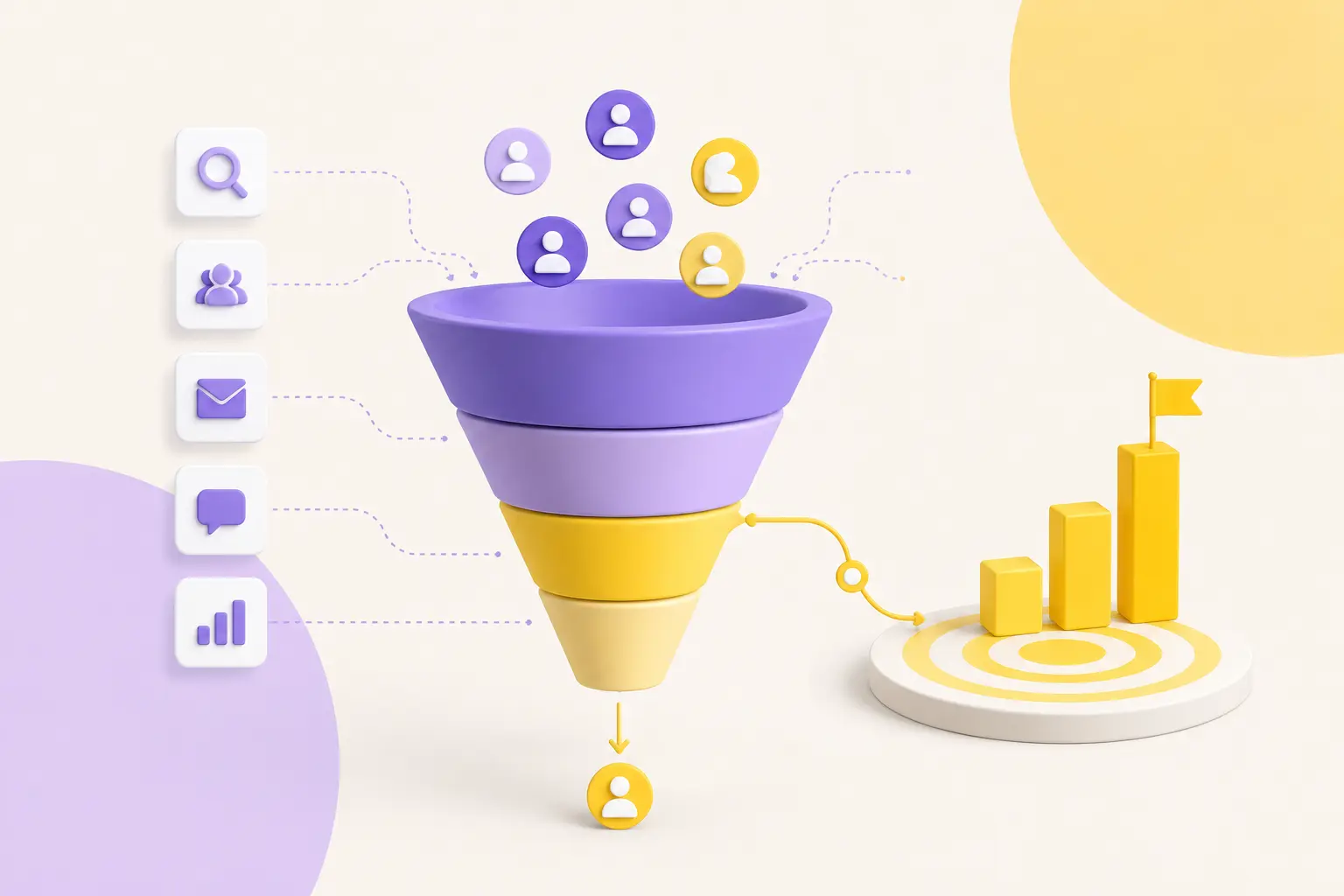
Ask most B2B teams to describe their strategy and you’ll get a list of tactics: some paid search, a bit of LinkedIn, a newsletter, an SEO project. Tactics aren’t a strategy. A full-funnel strategy is the decision about how those pieces hand off to each other, and how you split the budget between the buyers ready now and the far larger group who will be ready later. Get that split wrong and growth stalls no matter how good the individual tactics are.
The 95-5 rule changes where the money goes
The most important research in modern B2B marketing is deceptively simple. Professor John Dawes of the Ehrenberg-Bass Institute, working with the LinkedIn B2B Institute, showed that at any given moment only about 5% of potential buyers are in-market, actively looking to buy. The other 95% are out-of-market, and won’t buy for months or years. Because most B2B contracts run for years, a company might be genuinely in-market for only a few weeks out of every sixty.
The implication is uncomfortable: a funnel built entirely to capture that 5% ignores 95% of your future customers and competes for the same scarce demand as everyone else, which drives up costs. A full-funnel strategy funds both the harvest and the planting.
Top of funnel: build memory, not just leads
The job at the top is to be remembered by the 95% before they need you, because the brand a buyer already recognises is the one that makes the shortlist. Judge this stage by whether the right audience is growing and by branded search, not by last-click conversions, and don’t cut it because it doesn’t convert on the spot. Les Binet and Peter Field’s long-running effectiveness research points to roughly a 60/40 split between long-term brand building and short-term activation for sustainable growth. Most B2B teams are inverted, spending almost everything on activation.
Middle of funnel: turn interest into intent
This is where most strategies are thinnest. Someone knows you exist and has a problem, now what? Nurture, proof, and education live here: case studies, comparison content, email sequences, webinars. With buyers spending roughly 80% of the journey self-educating (Gartner), the middle of the funnel is now doing work your sales team used to do in meetings. Resource it like it matters, because it does.

Fig · Nurture and proof: the middle funnel
Bottom of funnel: make the decision easy
At the bottom the buyer is close, so the work is removing risk and friction: clear pricing, honest comparisons against alternatives, strong proof, and a low-commitment first step. High-intent search and review sites like G2 and Capterra live here. It’s the cheapest place to win because demand already exists, which is exactly why it’s so tempting to over-invest here and starve the stages that create demand in the first place.
The stages everyone forgets: the committee, and after the sale
Two things quietly decide B2B economics. First, the buying committee: Gartner puts the average buying group at six to ten people, and Forrester’s State of Business Buying found that 86% of B2B purchases stall at some point. Content that helps your champion build internal consensus, ROI models, one-pagers, risk summaries, is often what unsticks a deal. Second, retention and expansion: a funnel that ends at the sale treats every month as a fresh acquisition problem, when your existing base is the cheapest growth you have.
The point is the handoffs
A full-funnel strategy isn’t doing everything. It’s being honest about where your funnel leaks, funding demand creation and demand capture in deliberate proportion, and refusing to judge every activity by the same short-term metric. Strategy is deciding what connects to what, and then holding the line long enough for it to compound.
Leave a Reply